

What Would the Victorians Do?
Resurrect the railway barons, hand them a gigawatt data centre, and stand well back. A thought experiment about British speed, the Beijing lab that is actually living it, and the river under Sheffield

THE SUNDAY SIGNAL · Issue #63 · Week 29 · Sunday 19 July 2026
This issue is also available as a podcast. Listen on Spotify, Apple Podcasts or YouTube.
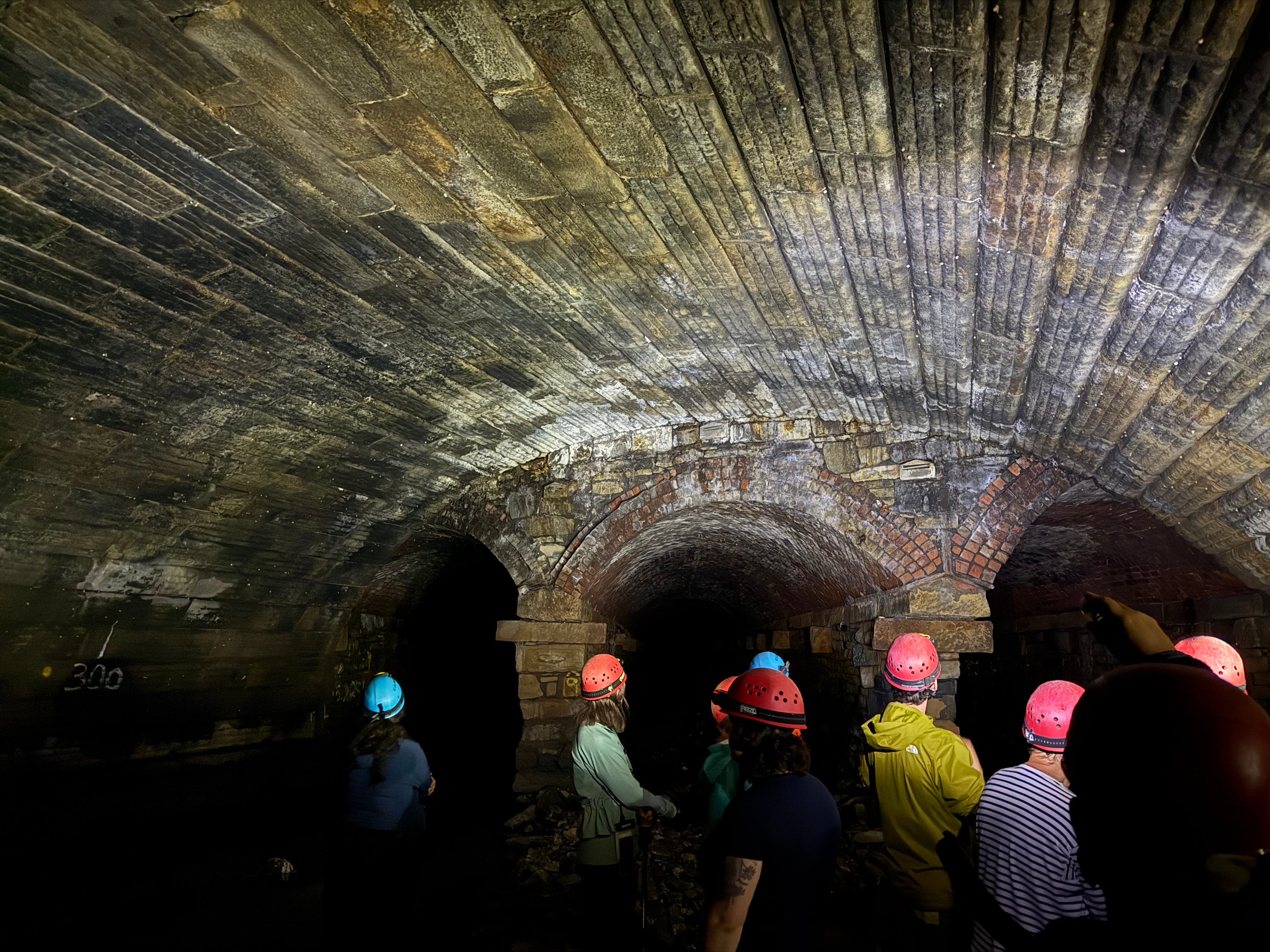
Ten days ago I climbed down into the Megatron, the vaulted Victorian culvert beneath Sheffield station, and watched a river that engineers buried a century and a half ago still running through the dark. On Thursday a Beijing lab founded in 2023 shipped a 2.8-trillion-parameter AI model that matches the American frontier on several of the benchmarks that matter, and promised to hand out the weights within a fortnight. One is a monument to how fast Britain once built. The other is a measure of how fast somebody else is building now.
BOTTOM LINE UPFRONT: Britain wants Victorian results without Victorian methods, and at the moment we get neither. Run the thought experiment properly and the conclusion cuts both ways. A resurrected syndicate of railway barons would make Britain the compute capital of Europe within three years, and they would poison rivers, flatten villages and ruin small investors to do it. Then look east. China has already adopted most of that playbook, swapping the speculative chaos of the Railway Mania for the discipline of the five-year plan, and this week’s launch of Kimi K3 shows what the swap buys. The lesson of both centuries is the same. Speed has a price, and somebody always pays it. The only question worth asking is whether they got a vote.

They would not reform the planning system. They would dismantle it
Start with a thought experiment. Resurrect a syndicate of Victorian railway barons, together with the parliamentarians who served them. Hand them the blueprints for a one-gigawatt AI data centre. Tell them Britain has a compute bottleneck and that our rivals do not. Then stand well back, because what follows would be terrifying, spectacular and brutally fast.
They would look at our fifteen-year waits for a grid connection, our planning inquiries and our environmental impact assessments, and they would not reform them. They would dismantle them.
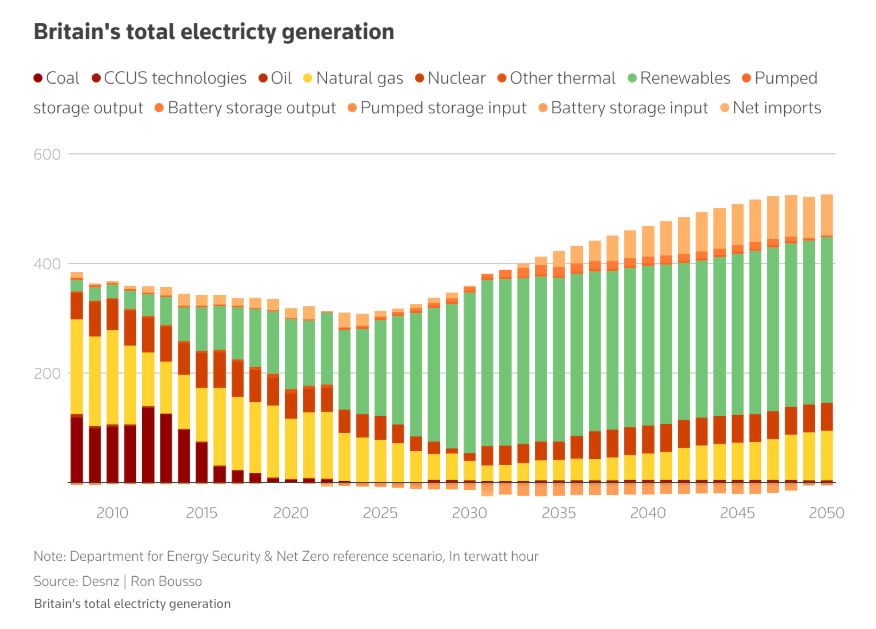
Today a hyperscaler that wants to build a data centre in Britain faces years of council battles, objections about visual impact and noise complaints about cooling fans. The Victorians would not fight that system. They would go over its head, exactly as they did in the 1840s: a private bill in Parliament. Once passed, the AI Infrastructure Act would grant the Great British Compute Company the power of compulsory purchase. If the most efficient site for a 500-megawatt campus were flat land in the Home Counties, they would draw a straight line on the map, buy the villages in the way at a price Parliament had set, and level them. No judicial review, no appeal. The Midland Railway did precisely this to Sheffield in the 1860s, which is why a river runs beneath Platform 5. More on that later.
The single biggest obstacle to AI in Britain is that the National Grid cannot supply the electricity. A Victorian engineer would find the idea of waiting a decade for a wire from a regulated monopoly absurd, so the syndicate would build the power station inside the data centre fence. If nobody would licence a small modular reactor quickly enough, a private gas-fired station would go up beside the server halls, burning whatever fuel was cheapest and most reliable. They would sign no offshore wind agreements and make no Net Zero pledges. The exhaust stacks would blanket the surrounding country in smog, and they would call the smog progress, because to them it was.
Then there is the water. An AI campus generates astonishing heat and drinks millions of litres to cool its chips. Modern operators negotiate with water companies for years to avoid draining the local supply. The Victorians solved water problems by force. The men who entombed the Sheaf in brick would appropriate a major waterway, perhaps the Trent or the Ouse, divert it through the cooling systems and return it to its bed at 40 degrees. Everything downstream would die. The server racks would hold their optimal temperature. They would consider that a fair exchange, and they would not commission a study on it.
A burst bubble still leaves the infrastructure standing
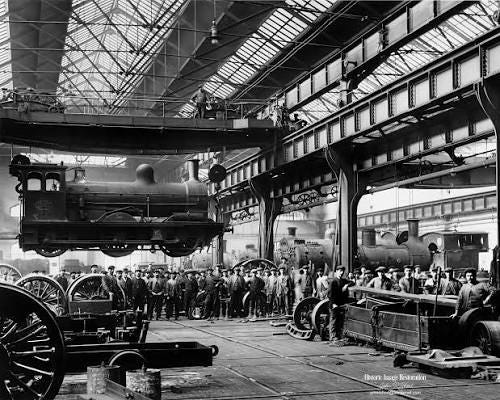
The financing would mirror the Railway Mania of the 1840s, when Parliament passed 272 railway acts in a single year at the top of the bubble. Rather than depend on three American hyperscalers, the Victorians would float hundreds of speculative AI infrastructure companies on the London Stock Exchange, promising impossible returns on “compute yields”. The bubble would inflate and it would burst, ruining thousands of middle-class investors and bankrupting half the companies on the list. And when the dust settled, the concrete shells, the fibre and the power stations would still be standing, bought out of receivership for pennies in the pound. Britain would emerge scandalously overbuilt, which is another way of saying ready. It is exactly how a financial catastrophe left us with the best railway network on earth.
The Workshop of the World would reopen, whatever the cost
Give the syndicate a second morning and they would spot the deeper weakness. Modern Britain depends on Taiwan for semiconductors, on China for steel and batteries, and on globalised supply chains for copper. To an industrialist who built an empire on domestic coal and iron, that is not a talking point. It is a survival problem. So the programme would widen.
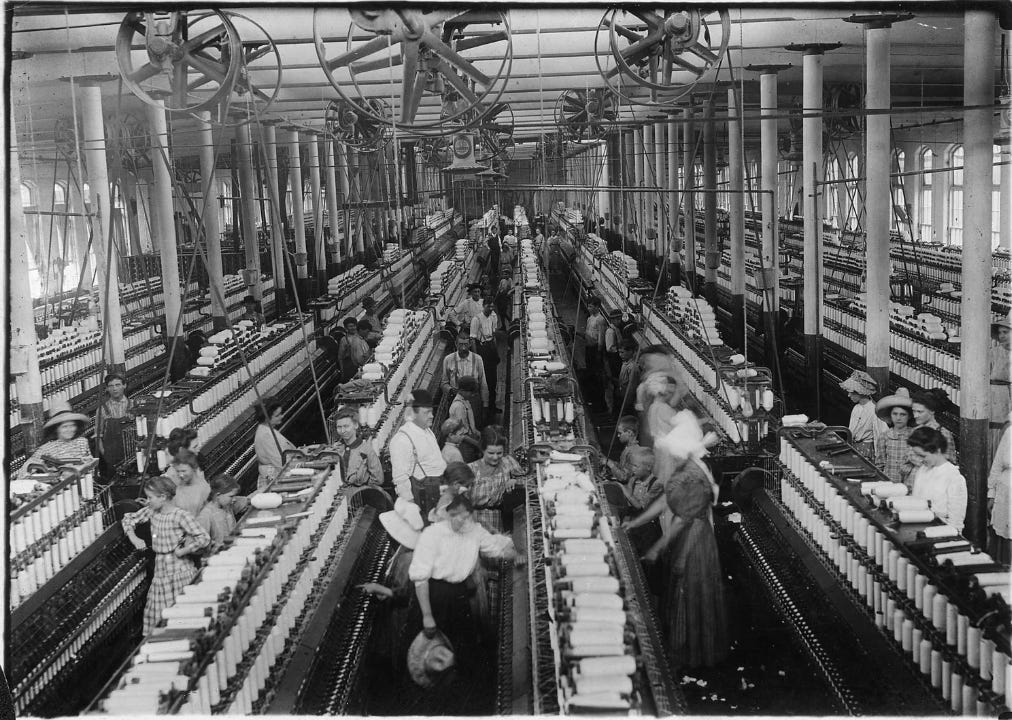
Semiconductor fabs are the cotton mills of this century: the most complex factories on earth, needing billions in capital, enormous power and millions of gallons of ultra-pure water. The Victorians flooded the Thirlmere valley to water Manchester; their heirs would dam valleys in Wales and Scotland to wash silicon wafers, and they would run the chemical waste into the nearest estuary rather than regulate it. Cornwall’s lithium would come out of the ground through deep shafts and thousands of workers rather than through five-year environmental surveys, and any picturesque village sitting on a vein of critical minerals would be moved, on the Victorian principle that what lies beneath the ground matters more than whatever happens to be sitting on top of it.
They would treat the closure of primary steelmaking at Port Talbot as national self-sabotage and reverse it, expanding the blast furnaces rather than replacing them, and reopening the coking coal seams of Yorkshire and Cumbria to fire them. And to staff it all they would resurrect the company town: Saltaire with fibre broadband. The corporation would build the factory, then build the workers’ houses, own the shops and run the schools, in exchange for a workforce that is regimented, non-unionised and entirely dependent on the employer for its livelihood. They had a word for that arrangement: paternalism. We would have another: feudalism with a pension scheme.
Would it work? Almost certainly. Within three years Britain would have the largest AI infrastructure in Europe and be closing on the world. We would fab our own chips, mine our own lithium and forge our own steel, insulated from every supply-chain shock the Pacific can produce.
And the price would be a return ticket to the nineteenth century: dead rivers, demolished villages, ruined investors, abandoned climate targets and a workforce with no vote on any of it. The speed we envy in the Victorians was never a technique that we have somehow mislaid. It was a willingness to send the bill to people who could not refuse it: the poor, the unborn and the landscape. Deindustrialisation, seen from this angle, was not only an economic retreat. It was a choice to buy clean air and clean rivers at the cost of sovereign output. The thought experiment does not tell us to copy the Victorians. It tells us the price we are currently paying for the right not to.
That would be a comfortable place to stop, if the syndicate were safely dead. The trouble is that a version of it is alive, well and shipping product…
Meanwhile in Beijing, the syndicate is alive and shipping product
On Thursday, Moonshot AI released Kimi K3. The lab was founded in Beijing in 2023 by Yang Zhilin, formerly of Google Brain and Meta, and the numbers deserve a moment. It is a 2.8-trillion-parameter mixture-of-experts model that activates just 16 of its 896 experts per token, with a full million-token context window and native vision. Moonshot claim their new attention design decodes up to 6.3 times faster at long context, and they trained it quantisation-aware from the start, so the weights land at roughly 1.5 terabytes rather than something far worse. API pricing is $3 per million tokens in and $15 out, about a third of Claude Fable 5’s rate. And Moonshot promise the full open weights on 27 July.

Now the reality check, because vendor launches deserve one. On the broadest independent composite, Artificial Analysis’s Intelligence Index, K3 scores about 57: fourth in the world, behind Claude Fable 5 on roughly 60 and GPT-5.6 Sol on 59, and level with or ahead of Claude Opus 4.8. On Terminal-Bench 2.1 it posts 88.3, ahead of Fable and just behind Sol. It opened at number one in human preference rankings for front-end coding. It trails the top closed models on pure reasoning, on several software engineering suites and on vision, some of its best scores come from Moonshot’s own harnesses, and early reports describe it as verbose and only moderately fast. Treat the exact rankings as provisional until independent runs accumulate.
None of that blunts the headline. Open-weight models used to trail the closed frontier by six to twelve months. K3 is the first model at this scale with a firm open-weights commitment, and it lands within a point or three of the leaders on axes that matter commercially: long-context coding, agentic work, cost per task. From 27 July, any government, enterprise or lab prepared to run a serious cluster can self-host near-frontier capability, fine-tune it, distil it or audit it. And here is the detail that connects it to everything above: Moonshot built this under American export controls, without reliable access to the best silicon. Denied the finest tools, they got there on extreme sparsity, architectural cleverness and brute force: more chips of lesser quality, more electricity, more space. Investors have noticed; the company raised roughly $2 billion at a $20 billion valuation in May. A three-year-old lab, working under embargo, is now within touching distance of the frontier.
The real heirs of the Victorians work in Shenzhen, not Silicon Valley
Which brings me to the argument I actually want to make. If you want to see the ghost of the Victorian industrialist at work today, do not look to London, and do not look to Silicon Valley either. Look to Shenzhen, Hangzhou and Beijing. The parallel between nineteenth-century Britain and twenty-first-century China is one of the most robust in economic history: both achieved world-altering industrialisation by choosing scale and speed over local objection, democratic consultation and environmental caution. K3 is the perfect lens for it.

Take compulsory purchase. Just as the Midland Railway used an Act of Parliament to bury a river and build a station on top of it, the Chinese state uses centralised authority to abolish objection altogether. Under the “Eastern Data, Western Computing” programme, thousands of miles of fibre now connect the coastal tech hubs to state-built data centre clusters in Guizhou and Inner Mongolia, where land and energy are cheap. When a high-voltage line needs to cross a province to feed an AI cluster, the state mandates it, relocates whoever is in the way and builds it in months.
Take the mania. In 1846 Parliament passed 272 railway acts. If that number seems to be following you around this issue, it is rather the point. Most of those companies failed; the tracks remained. China’s version is called the Hundred Models War: billions of RMB poured into dozens of competing AI labs on heavily subsidised compute, in the full expectation that 90% of them will fail or merge. The Victorians ruined private shareholders. Beijing absorbs the losses into the state. Both treat the waste as an acceptable tax on the road to supremacy. Moonshot is simply what a survivor looks like.
And take the bottleneck. Faced with a collapsed tunnel, a Victorian engineer went through it rather than around it. Faced with export controls, Chinese engineers networked vast clusters of less efficient domestic chips and accepted the energy penalty, throwing cheap coal and subsidised solar at the data centres until the compute went through. It is the modern equivalent of burning more coal to force a heavy train up the gradient.
The execution is identical: rapid, aggressive, unsentimental. The engine is not. The Victorians ran on fragmented, private, speculative capital. The Midland buried the Sheaf to beat a rival and enrich its shareholders. China runs on state direction: Moonshot are a private company, but they float on subsidised compute, a command-driven grid and a national mandate for AI sovereignty at any cost. China has kept the Victorian tolerance for landscape-altering speed and replaced the chaos of privateering with the discipline of the plan. Whether that combination can outlast its own demographic arithmetic, and whether Western export controls can slow it, are questions for a future issue. What it has already done is expose our own position: we have given up the Victorian methods and not replaced them with anything that builds.
The River They Buried
All of this started underground. My Yorkshire Post column this week, reproduced in full.

Last week I climbed down into the Megatron. It sits beneath Sheffield station, a Victorian chamber so large that urban explorers compare it to a cathedral, though no cathedral I know of has a river running through the nave. The River Sheaf, which gave the city its name, has been flowing through this brickwork in the dark for a century and a half.
The Victorians put it there. In the 1860s the Midland Railway needed a direct line into Sheffield to replace an awkward branch connection from Rotherham Masborough, and the obvious route ran through the Sheaf Valley. A river was in the way. So they entombed it in brick culverts and built their station on top, and when the trains started running in 1870 nobody standing on the platforms had any idea what was rushing under their feet. Most passengers still don’t, though a grated lightwell built into Platform 5 now lets the inquisitive look down at the water.
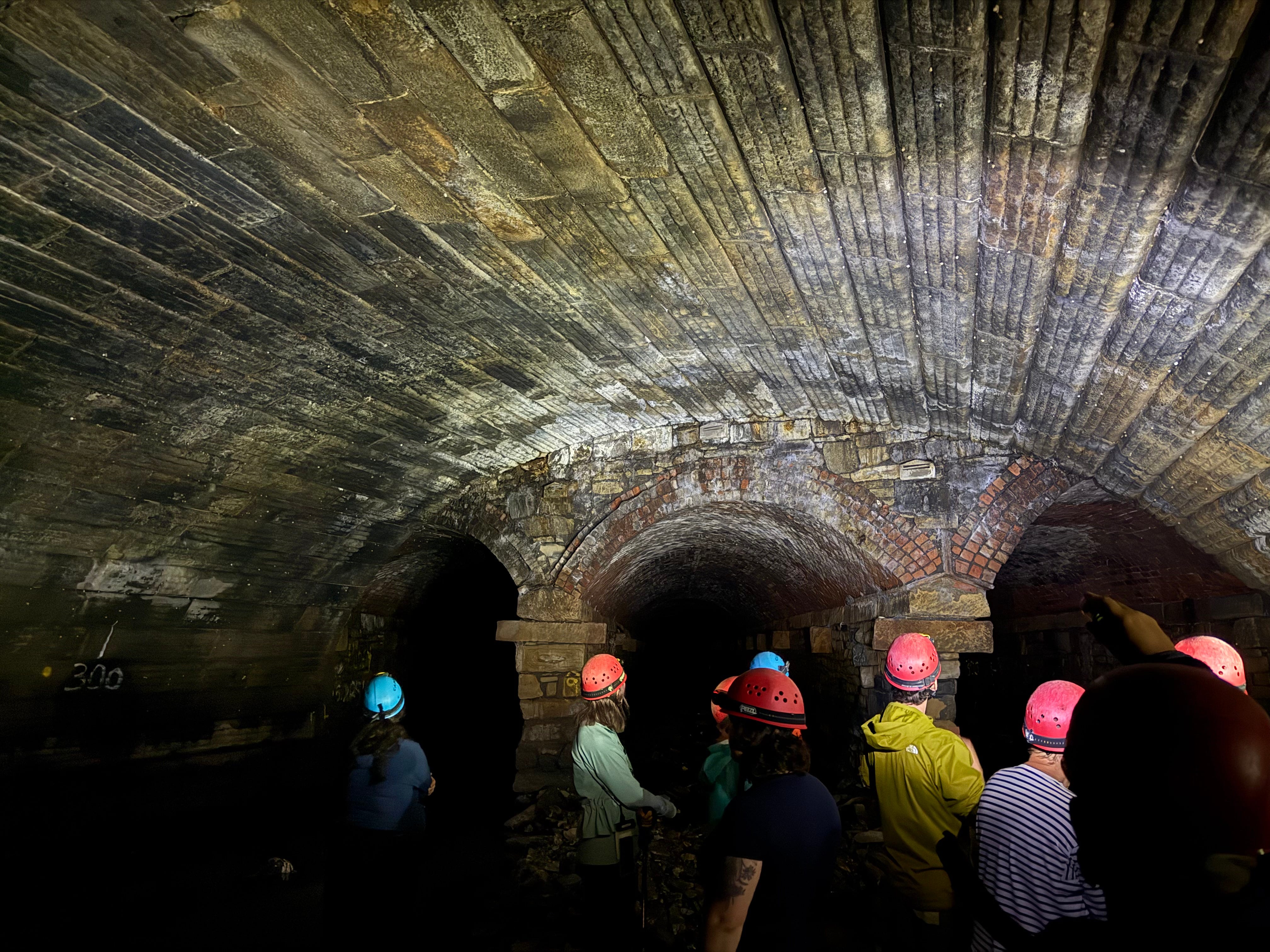
What struck me underground is that none of it is crude. The great parabolic arch, three bricks thick, was designed to withstand the weight of trams crossing Exchange Street as well as to swallow floodwater. This was the foundation on which modern Sheffield was built, and it went from plan to platform in a decade.
Before anyone holds that decade up as a rebuke to modern Britain, though, the ledgers deserve a look. Brunel told investors the Great Western Railway would cost £2.5 million and spent more than £6 million. Parliament passed 272 railway acts in 1846 alone, at the top of a mania that ruined thousands of small investors, and the navvies who dug the Woodhead Tunnel died, reportedly, at a higher rate than soldiers at Waterloo. Victorian speed was subsidised by people who never got a vote on it.
The river got no vote either. Bury a watercourse and you abolish its floodplain, which is fine until the weather has other ideas. In December 1991 the Sheaf backed up and flooded the station, halting services on a main artery of the regional economy; the tree branch it dumped on Platform 5 was kept and given a commemorative plaque. Keeping the 750-metre culvert clear now falls to a £3 million Environment Agency screen at Granville Square, while over at Castlegate the council is demolishing a 1917 culvert altogether, daylighting the Sheaf to make a park that can hold floodwater. The rule the Victorians never wrote down: skip the environment’s invoice and you settle it a century later, with interest.
And yet. Anyone who concludes that caution is free has not read the other column of the ledger. The Victorians built first and posted the bill to their great-grandchildren; we send the bill before the building starts. A passing loop takes a decade of consultation. HS2 shed its limbs one assessment at a time, and the grid connections our AI data centres queue for can take longer to approve than the entire station took to build, river and all. Every reservoir we fail to dig lands on the people of 2126 just as surely as the culverts landed on us, except that they will get nothing in exchange.
Bill Drummond of The KLF painted a question on the culvert wall down there: “Is the river really beautiful or is it just the gradient of the land?” I came up blinking into the daylight with a different question, which is whether Britain can still build anything important and leave something worth inheriting at the same time. We managed the first half 150 years ago and have spent a fortune on the consequences. At the moment we manage neither. When you read this on Friday morning, trains will be pulling out of Sheffield above a hidden river, proof that a serious country has to hold two thoughts at once: build the thing, and remember who settles the account.
Guided tours are available at The Sheaf and Porters Rivers Trust
The Signal Tech & AI Layoff Tracker

The corporate theme of Q3 has solidified into a clear compute-over-compensation trade. Profitable mega-cap organisations across tech and telecom are aggressively flattening operational, customer support and traditional engineering layers. The goal is no longer margin defence against cooling revenues but an active capital transfusion: freeing up liquidity to fund AI infrastructure, custom silicon development and data centre cluster deployments.
Verizon, 7,800. The largest single restructuring event of the summer, in pursuit of the targeted $5 billion operating-expense reduction. Verizon eliminated 4,800 domestic customer care, operations and administrative support roles, with internal documentation explicitly outlining the permanent transition of routine customer support to conversational LLM agent frameworks. Concurrently, the company announced the divestiture of 274 corporate-owned retail storefronts to third-party franchise operators, shedding a further 3,000 corporate retail field positions from its direct payroll. Chief executive Dan Schulman has said AI will replace “a large percentage” of customer service positions.
Thomson Reuters, ~500. The week’s clearest structural blueprint for technical workers. Thomson Reuters are cutting roughly 500 legacy engineering and tech operations roles, 1.8% of the global workforce, while planning to hire 250 specialised “AI-native” engineers over the next 24 months. Read that arithmetic the way a legacy developer will: generative developer tools compressing headcount, with identical or superior output demanded from smaller, leaner teams. Expect mid-market software firms to copy it before the Q3 earnings calls.
Mid-market and infrastructure trims, 457. GoKwik, an e-commerce infrastructure platform, executed a sharp 20% workforce reduction, 120 positions, citing a deliberate shift toward AI-automated merchant workflows and support structures. Charter Communications formally logged a Missouri WARN notice eliminating 107 network engineers and IT managers at its Town and Country operations hub, outsourcing those layers to Capgemini. And Rogers Sports & Media dismissed 230 employees and shut six radio stations across Canada as programmatic, AI-driven ad sales hollow out legacy regional advertising.
Watch list for Week 29: enterprise software QA and release engineering tiers, where automated, LLM-driven code-testing suites are being treated as drop-in replacements for human QA benches; and B2B customer success operations, where telecom has proved that customer care can be reliably offloaded to fine-tuned agentic models, putting heavy account-management overhead in the frame before late-Q3 earnings cycles.
Final Thought 🚀
Hold this issue’s three stories together. A thought experiment says Britain could have Victorian speed tomorrow if it would accept Victorian costs. A lab in Beijing shows a country actually paying those costs, with a five-year plan where the share certificates used to be. And the tracker shows how the West is financing its own build-out: not with navvies this time, but with payroll.
Every era funds its infrastructure with the thing it is most willing to spend. The Victorians spent the environment and the poor. China spends whatever the plan requires. We are spending jobs, quietly, one restructuring memo at a time. And here is the part that should sting: we are paying without building. The layoffs run at roughly a thousand a day while the data centres queue fifteen years for a grid connection. That is the worst position on the board: Victorian costs, modern delays, nobody’s benefits.
The Victorians built the thing and never asked who settled the account. We audit the account so carefully that we never build the thing. Somewhere between the Megatron and the planning inquiry sits a country that can do both: build fast, and leave the people of 2126 something they will be glad to inherit rather than a bill they never voted for. Finding it is not a nostalgia project. On this week’s evidence, our competitors have already chosen their century. We should choose ours.
Until next Sunday,
David