


“Where the company is built is the question that matters, and the answer is the UK.”
Listen to the podcast on Spotify, Apple Podcasts or YouTube. Subscribe to the newsletter at thesundaysignal.ai.

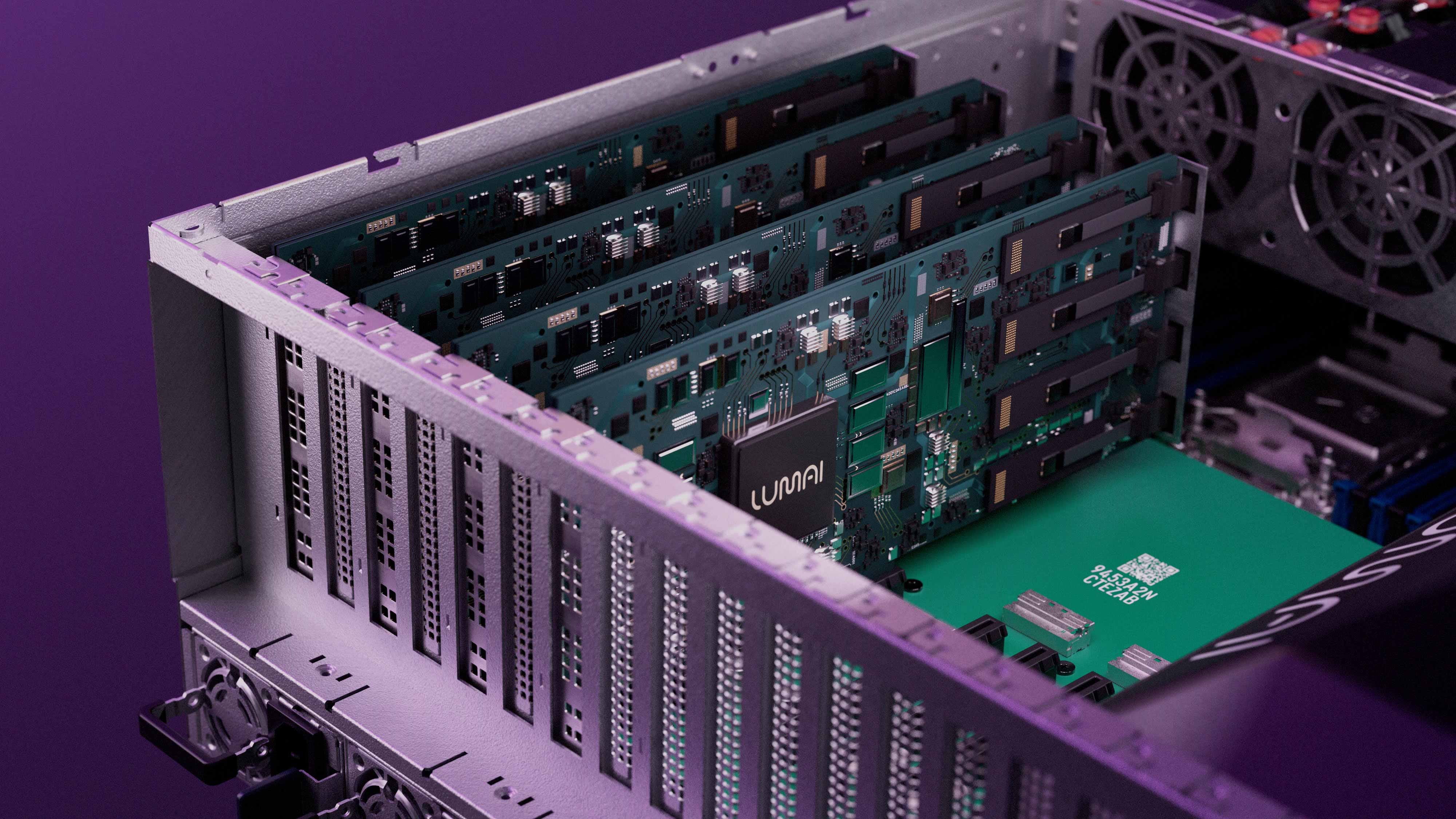
Dr Xianxin Guo is the CEO and co-founder of Lumai, the Oxford spinout building the world’s first server running billion-parameter large language models on optical compute. Last month, the company launched Iris Nova, currently doing real-time inference on Meta’s Llama 8B and 70B. On its own figures, Iris uses ninety per cent less energy than the GPU hardware the entire AI industry currently runs on.
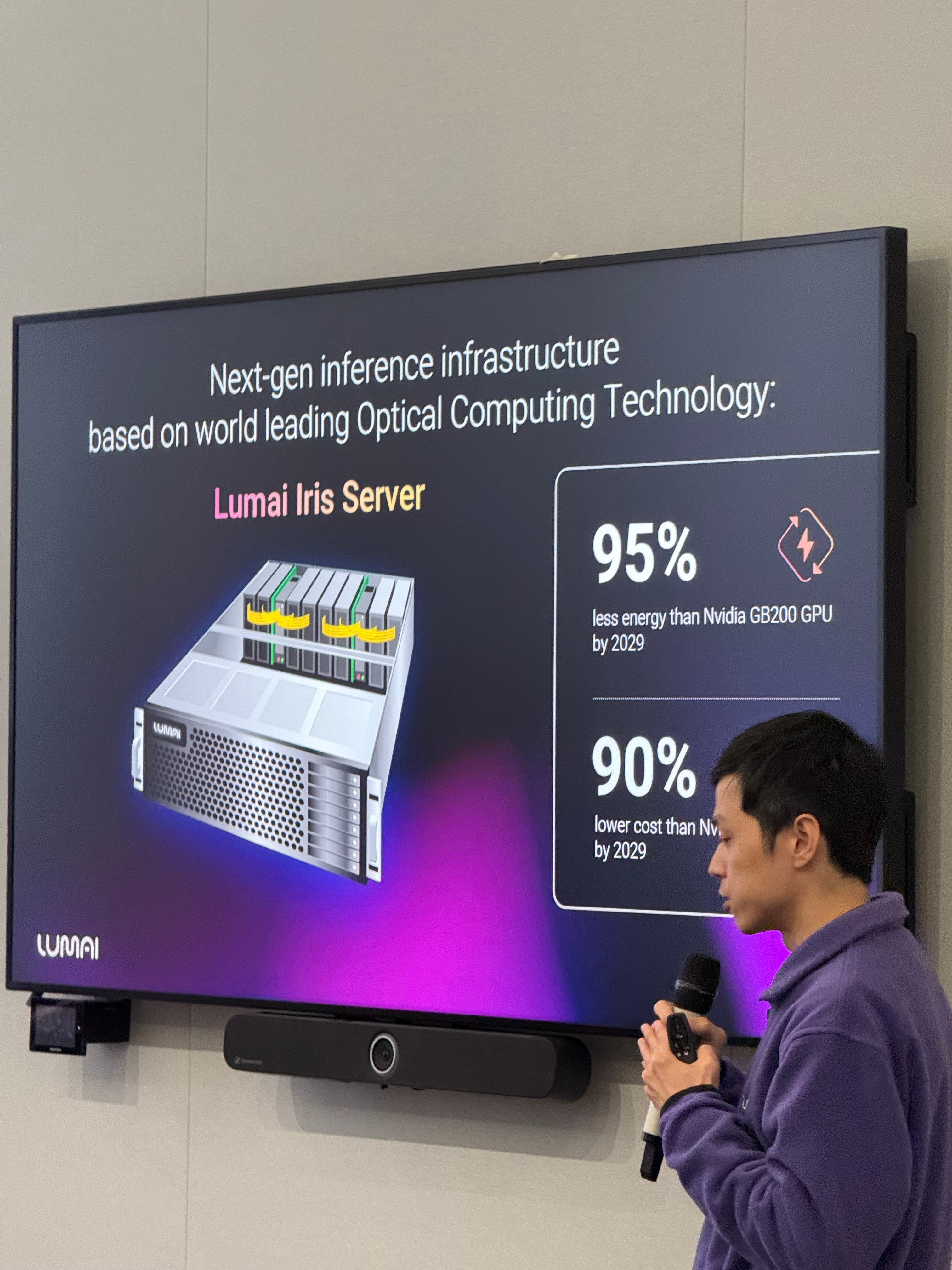
I first saw Lumai a fortnight ago at the Royal Academy of Engineering Enterprise Hub Demo Day. Guo was on stage, beside a slide of the Lumai Iris Server. The slide carried two forward claims against the hardware the entire industry currently runs on. Ninety-five per cent less energy than an Nvidia GB200 by 2029. Ninety per cent lower cost than Nvidia by 2029. Aggressive numbers, the kind you note and then chase. I followed up.
I sat down with him this week. Power, cost, adoption, capital, and whether Britain finally keeps something it invented. He gave the directest answers I have had from a British deep-tech founder in a long time. The whole exchange follows.
What makes this different
The Sunday Signal: In one sentence a data centre operator would understand, what does Lumai do that silicon cannot?
By using optical compute to run LLMs and other AI workloads we consume ninety per cent less energy, meaning that a data centre operator can produce significantly more AI tokens within the data centre at just ten per cent of the cost.
Lightmatter, Salience, Celestial and others are all chasing light. What is genuinely unique about your 3D optical approach, and why has nobody else made it work at this scale?
Other companies have tried to perform optical compute in the confines of a 2D chip however they are unable to reach the scale required for data centre AI. Computing in 3D gives us orders of magnitude more parallelism, millions of computations per cycle. Building on the many years of research at Oxford, Lumai has now launched our first generation, Iris Nova, which is the only system to run billion-parameter LLMs using optical compute. A genuine first.
Why a plug-in coprocessor rather than a new supercomputer, and where are its limits?
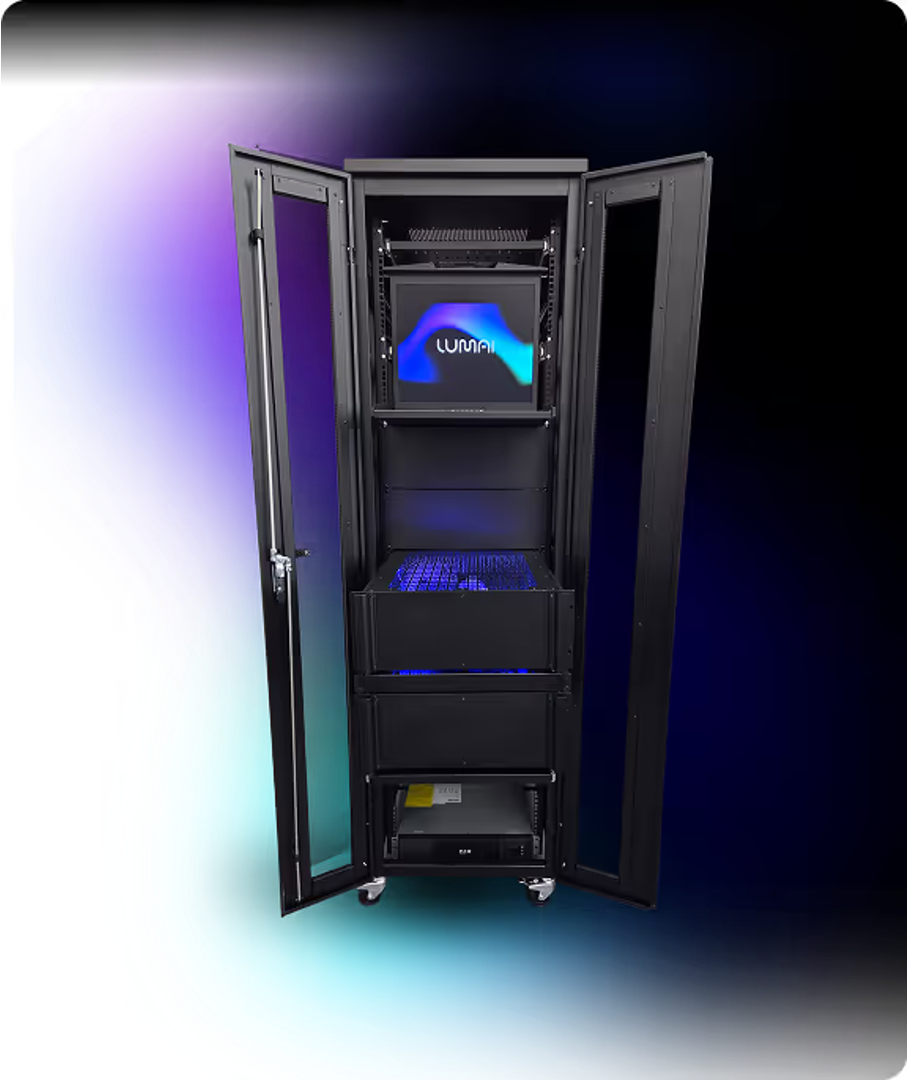
Lumai’s Iris server is ideal for processing a high-volume of AI tokens efficiently. Lumai Iris is an Ethernet-attached appliance that fits in a standard rack, and runs alongside GPUs. Our sweet spot is inference prefill and other compute-bound workloads.
Do I have to rewrite my models to use an Iris server, or does it plug straight into PyTorch and the standard frameworks?
It plugs straight in. Users can take a pre-trained model, compile it for Lumai hardware and off they go.
The people behind it
You spun this out of Oxford. Who does what?
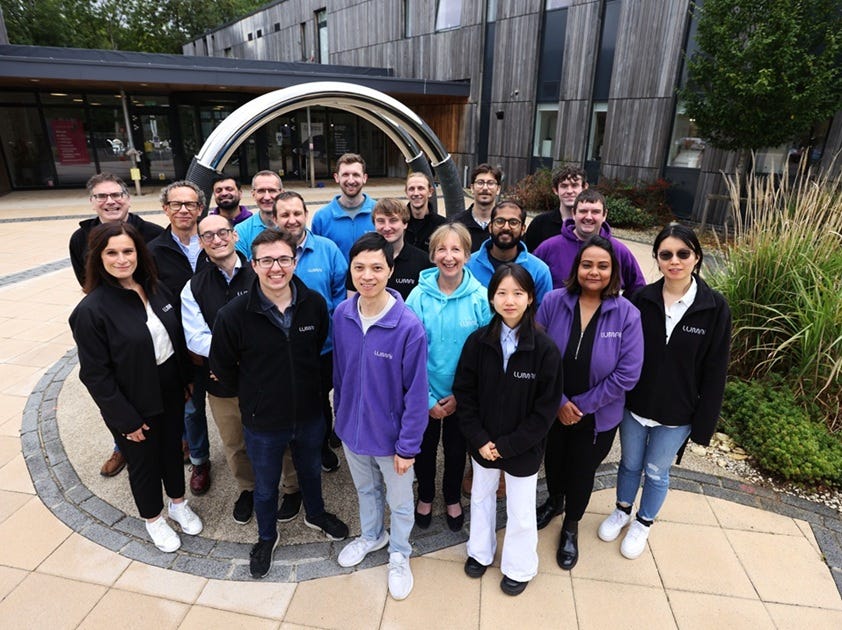
I lead the company. Dr James Spall, our CTO, runs the technology. He and I built the original optical system together in the lab. We work with an amazing team who bring a vast amount of technical and product experience from the likes of Arm, Intel, Altera, Meta, Imagination Technology, Cisco and HPE.
You moved from Head of Research to CEO. What did you have to unlearn?
In research you optimise for being right. As a CEO you optimise for leading and being useful, to customers, to the team, to investors. The hardest thing to unlearn was accepting that a decision made in a week with 70 per cent certainty beats a decision made in three months with 95 per cent.
Can you actually build a manufacturing and deployment team in the UK, and at what point do you have to give up and hire in the US?
We already have a development team in the UK which has an amazing talent pool and ecosystem covering electronics, software and optical. We will hire business development and account-facing teams in the US, so that they can be close to customers. We have a global supply chain, including in the UK.
What ninety per cent less power actually means
Translate the ninety per cent figure. Rack, data centre, grid connection.
Ninety per cent reduction of the power needed for the same compute at the rack appliance level. Less power means less cooling, smaller power supplies, etc. which means that this ninety per cent ripples across the data centre. There are other elements within a data centre that we don’t affect (e.g. networking), so the overall reduction in power at the grid connection will be less than ninety per cent, but still incredibly impressive. What this is likely to mean in practice however is more compute capacity within the same power budget as the need for more tokens continues to grow.
Does technology like yours bend the IEA curve, or does cheaper inference just pull more demand forward?
AI is creating so much demand for compute that Lumai’s highly efficient processor will be used to deliver much more inference within the same data centre power budget. Cheaper inference will pull demand forward. Jevons’ paradox is real and we will see more AI used, not less.
If optical compute becomes the default for inference, what changes for where data centres get built?
In principle data centres could be built with smaller power requirements when using Lumai Iris servers, making a wider range of sites open for AI. Compute demand and wider geopolitical issues will more likely have a greater influence.
What it means for the cost of AI
If your numbers hold, what does that do to the price of running a frontier model, and who feels it first?
Those with high token usage limited by volume of tokens and their cost will feel the benefits first.
Define the metric. Is ninety per cent lower cost capital cost per server, or operator’s cost per token?
Cost per token. That is the only metric that matters to an operator running this at scale. This cost is a blend of equipment capital cost and data centre capital cost (power, backup generators, cooling, etc).
Lumai has raised a little over fifteen million dollars. American rivals have war chests forty times that. How do you fund the path to manufacturing scale?
We are not building custom silicon at the leading chip node as most of the hard computation is performed in optics. Our optical supply chain is a deliberate choice to use mature, high-volume components from established optical suppliers, which reduces the need to develop high-cost novel materials. We have just opened our next round to take us through to volume manufacturing.
How fast this moves
How quickly can optical compute go from evaluation to running production inference at a hyperscaler? What is the true blocker?
We are already deeply embedded in deep technical evaluation with hyperscalers, neoclouds, and research labs. It will then realistically take eighteen to twenty-four months from first evaluation to production at scale. The true blocker isn’t the technology, it is validation. A hyperscaler will not deploy a novel architecture into a revenue-bearing workload without months of validation, integration testing, and operational confidence. We have shipped Iris Nova for exactly this reason. It is the proof that the system works, runs real models, and behaves in a rack.
Without breaking confidences, who is testing it, and what does a first real deployment look like?
Our first deployment will be a cluster in a national lab who will test performance across a range of customer workloads, with different orchestration, and different models.
What does an operator actually have to give up to put an Iris server in, and how big is the switching cost?
It’s more about what they gain rather than what they give up. We have designed Lumai Iris to make access to these benefits as easy as possible, the same software frameworks, same models, just faster driven by more compute. The cost is the same as qualifying any new hardware vendor. Lumai’s advantage is that we can work alongside existing hardware to optimise each stage of the inference pipeline.
Keeping it in Britain
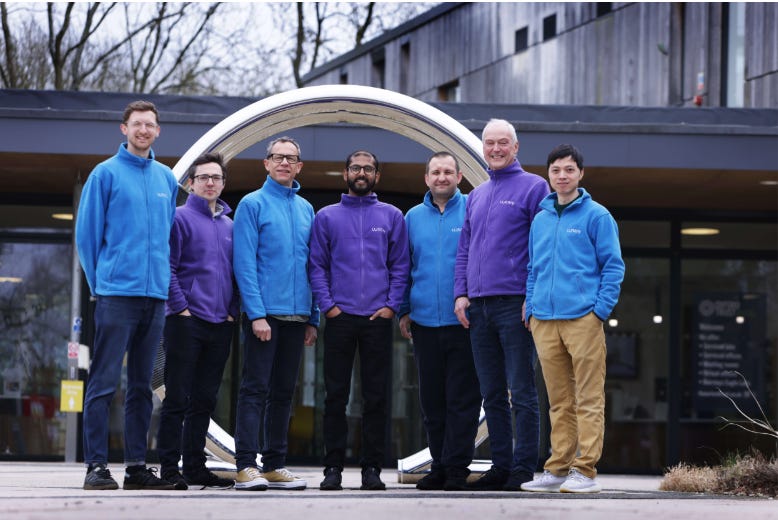
Your round was led by a Cayman-registered fund. Your expansion is into the United States. Of your backers, IP Group is the British one. Is Lumai going to stay a British company?
Yes. We are headquartered in Oxford. Our R&D, our engineering, and our senior team are here. We will grow overseas where it makes sense, but where the company is built is the question that matters, and the answer is the UK.
Does ARIA and sovereign compute translate into something that actually keeps a company like yours here, or is it words?
It is more than words. ARIA’s Scaling Inference Lab is a testbed for AI hardware technologies, prioritising rapid iteration, and open collaboration. This type of testbed is vital to any startup developing AI hardware and the fact that it is in the UK makes a massive difference.
Sovereign AI goes one step further. Investing five hundred million pounds in British AI companies to start up, scale up and win globally. This is in addition to the UK Government’s Department for Science, Innovation and Technology’s one hundred million pound funding package designed to “act as a first customer for promising UK startups who are building high-quality AI hardware products.”
Combined, these are exactly the sort of initiatives that will boost innovative startups like Lumai who are developing cutting-edge technology for such an important area of technology and UK growth.
Name the specific thing, a customer, a fab, a fund, that would make you put the next phase here rather than in the US.
A committed UK government anchor purchase of Lumai Iris server hardware into the AI Research Resource. Concrete orders from a sovereign customer do more for keeping the company here than any number of strategy papers.
To close
One sentence to a British policymaker reading this. What do they need to do, and by when?
Recognise that AI is just at the foothills of what is possible, that the UK has the talent and technology to benefit from this massive technological and economic shift, and that they need to do advanced procurement of UK-built AI hardware into the AI Research Resource and the Growth Infrastructure programme this financial year, or watch the next generation of AI compute be created outside of the UK again.
Read the full Issue #55 of The Sunday Signal at thesundaysignal.ai.
Listen on Spotify, Apple Podcasts or YouTube.
Until next Sunday, David Richards MBE.